

What to do
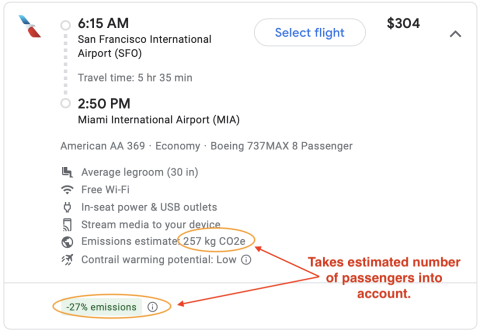
Once you’ve flipped your mindset to one in which crowded flights are awesome, the right website can help you find a more crowded flight. The carbon estimates produced by the Travel Impact Model (TIM) used by Google Flights take into account how booked a flight is likely to be. The more booked, the better, because you’re splitting the fuel amongst more people. The TIM model uses historical information about demand on a particular route to estimate how full a particular flight will be. That information is included in the emissions estimate number.
More tips and tricks for dramatically lowering your travel footprint here.
Why the difference
Sitting in a middle seat is not great for your comfort, but it’s great for the environment. Just like a car, a plane becomes more fuel efficient per passenger the more packed it is. A plane only uses a little bit more fuel for every additional passenger added to the flight.
Airlines have increased their average loading from 75% to 85% full in recent years, making recent flights on average more efficient than those 5 or 10 years ago.
Here is an example of how total aircraft fuel consumption changes as the plane goes from 1/2 empty to fully packed.
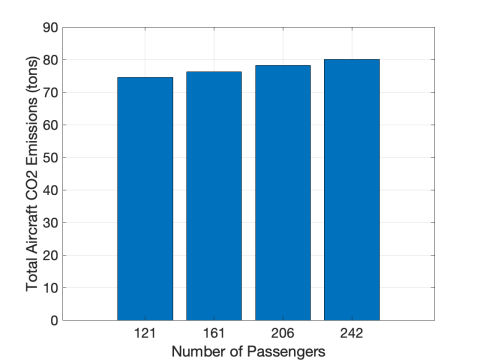
Fuel consumption barely budges even as the number of passengers doubles. Check out what this means for emissions per passenger.
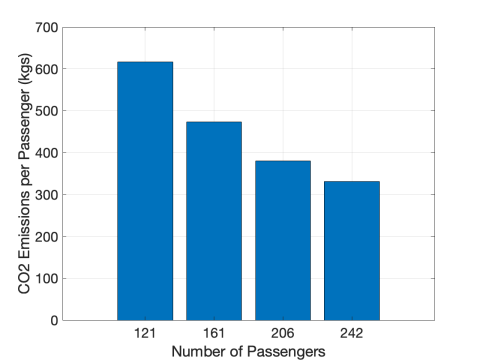
This key efficiency metric almost drops by 1/2 when the aircraft's load changes from 50% to 100% full.